EFOD Criteria
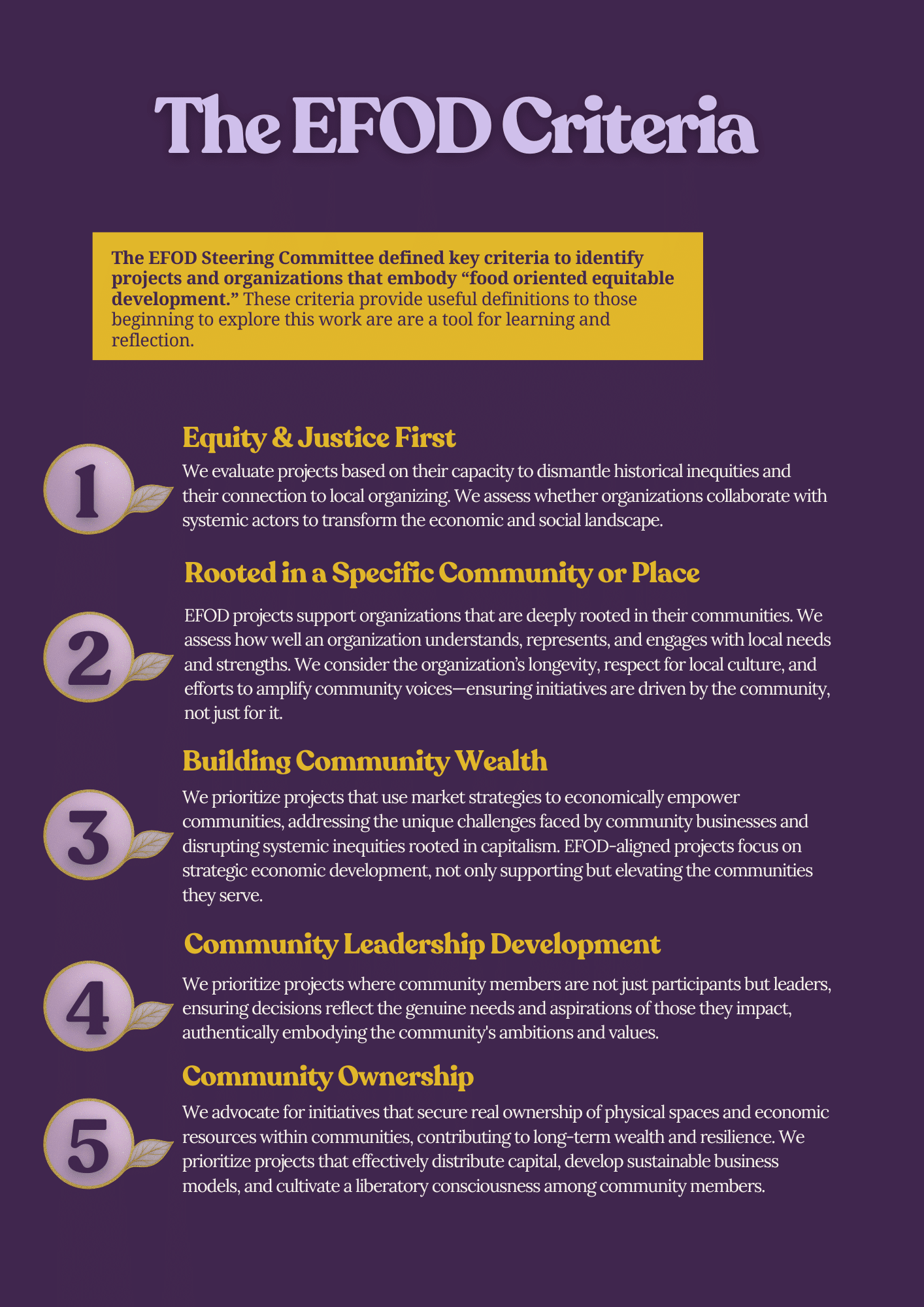
The EFOD Steering Committee defined key criteria to identify projects and organizations that embody “food oriented equitable development.” These criteria provide useful definitions to those beginning to explore this work are are a tool for learning and reflection.

CRITERIA 1
Equity & Justice First
We evaluate projects based on their capacity to dismantle historical inequities and their connection to local organizing.
We assess whether organizations collaborate with systemic actors to transform the economic and social landscape.

CRITERIA 2
Rooted in a Specific Community or Place
EFOD projects support organizations that are deeply rooted in their communities. We assess how well an organization understands, represents, and engages with local needs and strengths.
We consider the organization’s longevity, respect for local culture, and efforts to amplify community voices—ensuring initiatives are driven by the community, not just for it.

CRITERIA 3
Building Community Wealth
We prioritize projects that use market strategies to economically empower communities, addressing the unique challenges faced by community businesses and disrupting systemic inequities rooted in capitalism.
EFOD-aligned projects focus on strategic economic development, not only supporting but elevating the communities they serve.

CRITERIA 4
Community Leadership Development
We prioritize projects where community members are not just participants but leaders, ensuring decisions reflect the genuine needs and aspirations of those they impact, authentically embodying the community’s ambitions and values.

CRITERIA 5
Community Ownership
We advocate for initiatives that secure real ownership of physical spaces and economic resources within communities, contributing to long-term wealth and resilience.
We prioritize projects that effectively distribute capital, develop sustainable business models, and cultivate a liberatory consciousness among community members.



SEE WHERE YOU STAND
Take the EFOD Organizational Self-Assessment
